


“Prepare for the unknown by studying how others in the past have coped with the unforeseeable and the unpredictable.” – US General George S. Patton
Introduction
After a cataclysmic hiccup in March, markets rebounded with a vengeance in the second quarter of 2020. In fact, the Dow closed out its best quarter since 1987 on Tuesday, while the S&P and Nasdaq had their best quarters since the late-1990s. Several tailwinds, including fiscal and monetary stimulus, economic re-openings, and positive virus-related news, all combined to drive stocks higher in the quarter. This week, we are presenting the first part of a three-part series from Louis-Vincent Gave on the possible explanations for the impressive rally. Specifically in this edition, Louis dissects the premise that reopening the economy and returning to “life as usual” will lead to “more of the same” (i.e. sustained growth similar to what we experienced prior to the pandemic). Without spoiling the ending, Louis leaves room for two further explanations for the ferocious rally: (1) that investors have taken leave of their senses, or (2) are acting on the premise that cash may become worthless in the coming years. We’ve discussed both of these possibilities in recent newsletters (see No Revenue, No Profits, No Problem?; Bubble 3.0: End Game (Part II)), and since we believe these are vital topics to consider, we will be presenting Louis’ subsequent missives to readers in upcoming newsletters.Towards More of the Same? by Louis-Vincent Gave
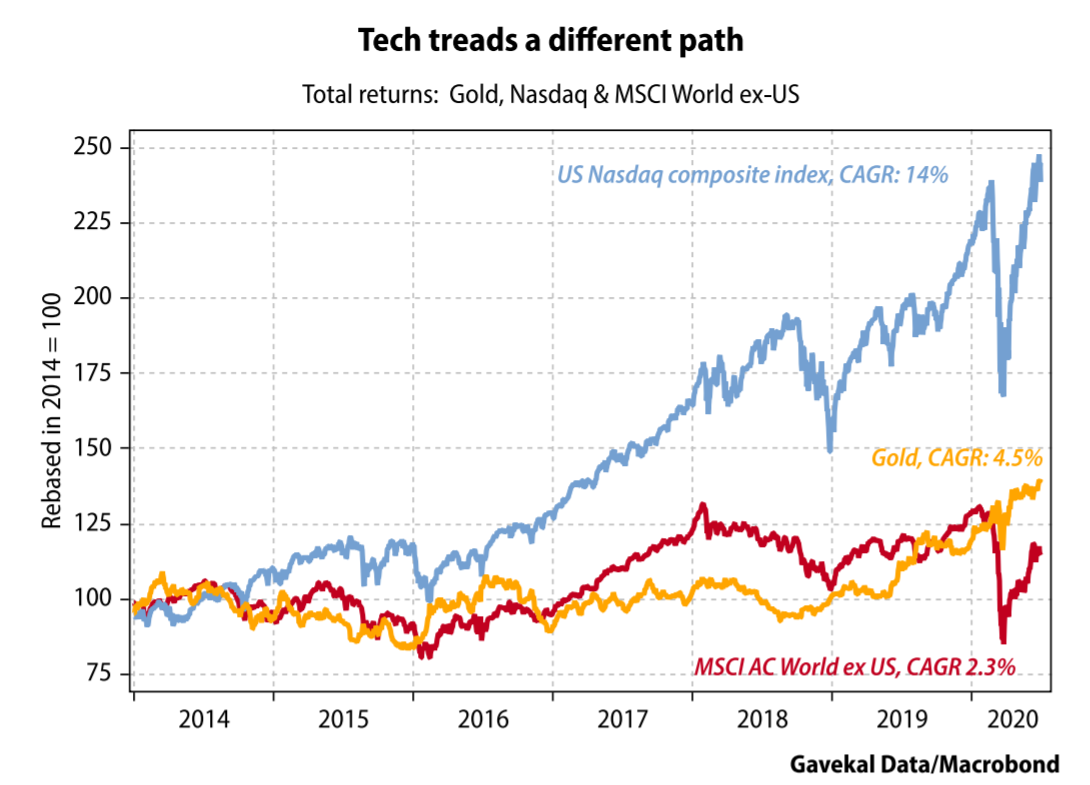
The rally in global equities since mid-March has wrong-footed most investors who were convinced that the threat of a record economic contraction would condemn equity markets to struggle for the foreseeable future. Yet most of the losses incurred in February and March have been made back and the leader of the previous bull market—US tech—has gone on to make new highs. Confronting this impressive rally, investors have been forced to come to one of three conclusions:- The Covid-19-induced halt to our economies will soon fade away like a bad dream, and growth will return to its pre-virus trajectory.
- Equity investors are crazy, or at least mesmerized by the kind of investing mania we see from time to time.
- Equity markets are shooting higher because a growing number of investors realize that the cash they hold is bound to become worthless. In a three-part series, I will review these potential explanations and try to illustrate why the third scenario may be unfolding in front of our eyes.
 Unfortunately, a fairly safe rule of thumb is that sequels are seldom as good as the original movie. And the foundations on which the above scenario rests may well prove to be shaky.
Foundation #1: We have seen this movie before
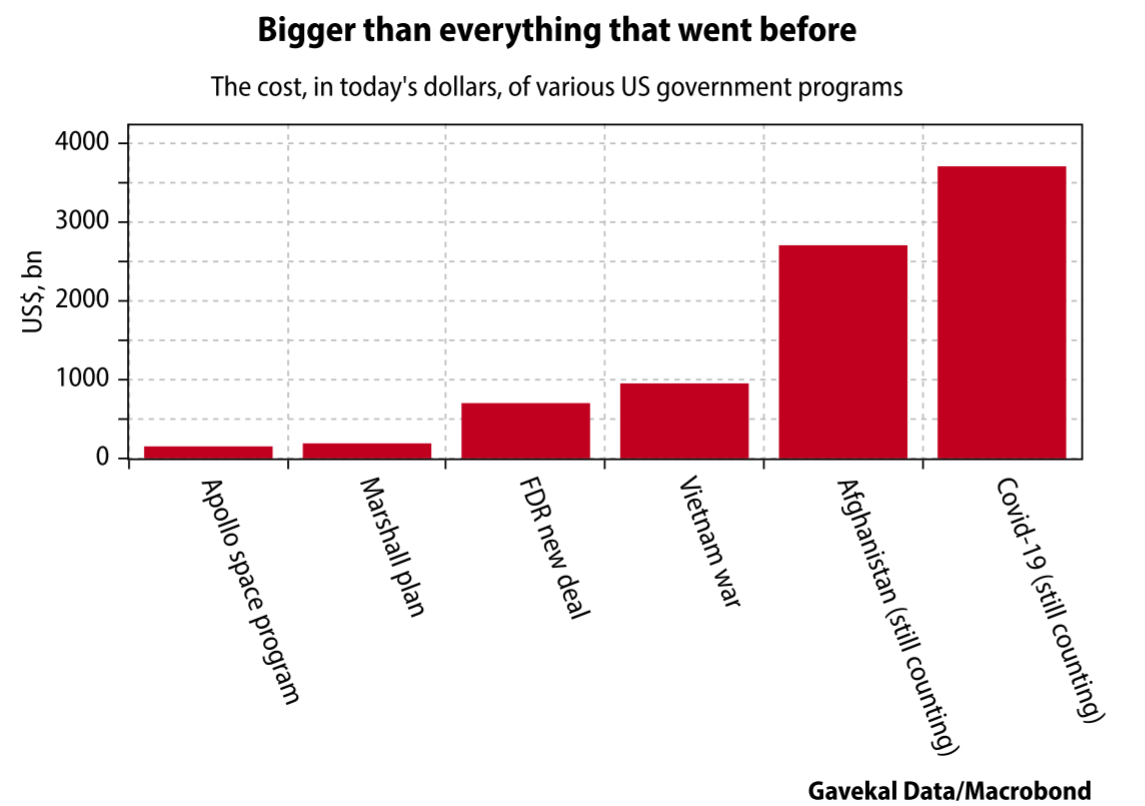
It is easy to poke holes in the argument that current conditions match the post-2008 environment. For starters, the collapse in economic growth across the globe is unprecedented; as has been the policy response. To illustrate what “unprecedented” means, consider the following charts:
Unfortunately, a fairly safe rule of thumb is that sequels are seldom as good as the original movie. And the foundations on which the above scenario rests may well prove to be shaky.
Foundation #1: We have seen this movie before
It is easy to poke holes in the argument that current conditions match the post-2008 environment. For starters, the collapse in economic growth across the globe is unprecedented; as has been the policy response. To illustrate what “unprecedented” means, consider the following charts:
- In the US, the fiscal response to the Covid-19 crisis so far amounts to 20x the Marshall Plan, or 5.5x the New Deal (in constant US dollars).
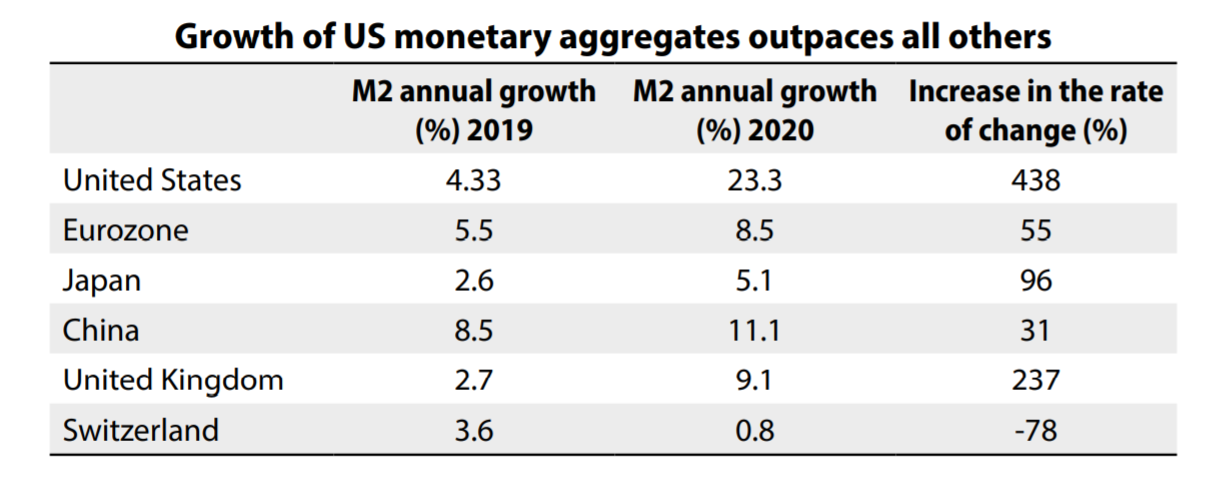
- The growth rate of US M2 stands at 23.3%, about twice its previous peak.
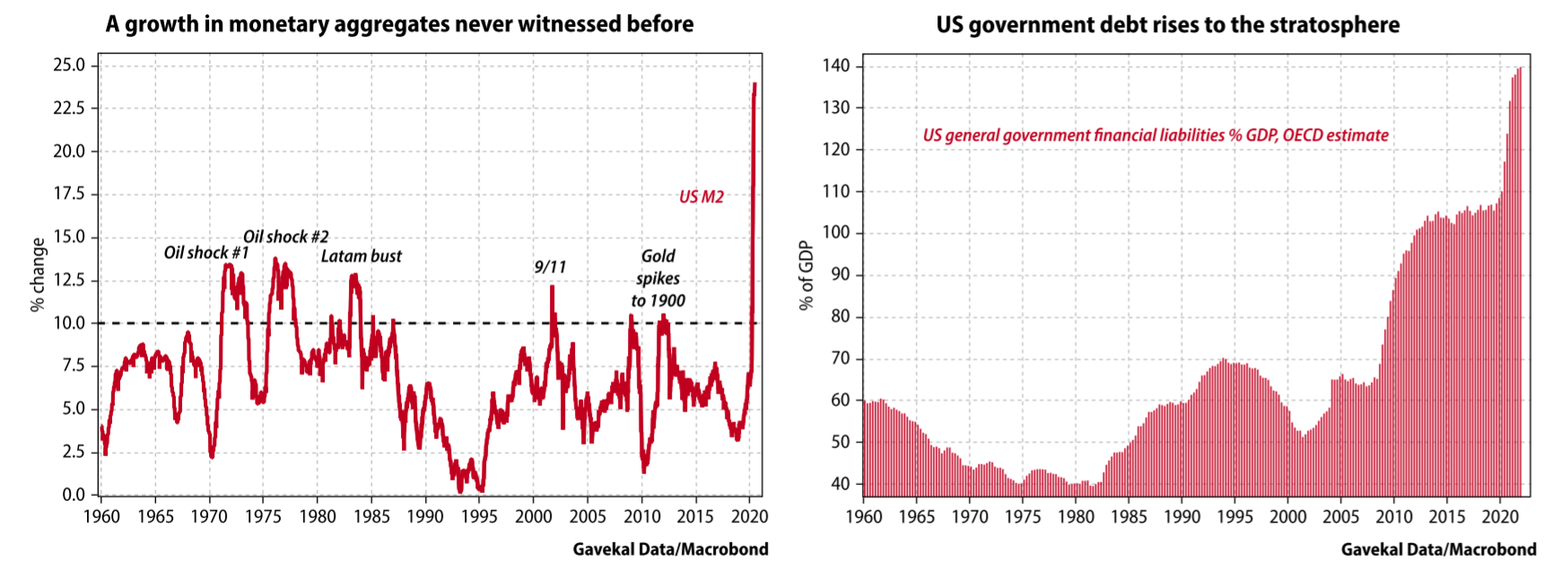
- US government debt as a share of GDP has taken out the highs (125%) reached during World War II, and it is still climbing.
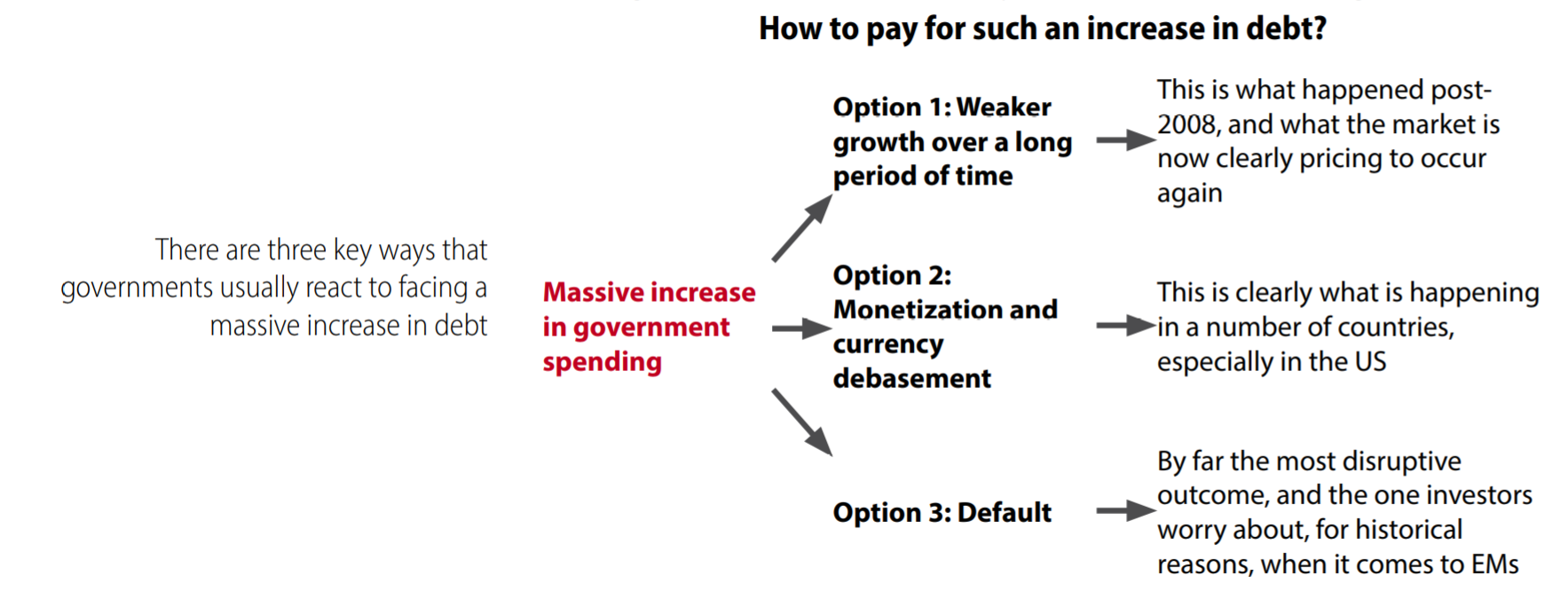 After the 2008 crisis, policymakers embraced option 1. In the US, the Tea Party took control of Congress and froze government spending for six years. In Europe, the 2011-12 eurozone crisis unleashed fiscal austerity. In China, the arrival of Xi Jinping to power in 2012 witnessed the start of a significant anti-corruption drive that froze spending on many projects.
Fast forward to today and the past is now another country. Fiscal austerity is as passé as the Harlem Shake. Thus, when it comes to fiscal policy, the current sequel already encompasses a significant plot twist to the original movie.
Foundation #2: The US will remain the cleanest dirty shirt
Given recent street riots, the continued rise in Covid-19 cases and the uninspiring choice that US voters face on November 3 (a choice as to who can spend the most unearned money fastest), the perception of the US being the world’s “cleanest dirty shirt” may be shifting. As a Canadian friend recently put it to me “living in Canada today feels a little bit like having an apartment above a crack-den”. Notwithstanding the Nasdaq making new highs, this spate of bad news may explain why since May 22nd, the US equity market has underperformed MSCI World (ex-US) by about -5%.
After the 2008 crisis, policymakers embraced option 1. In the US, the Tea Party took control of Congress and froze government spending for six years. In Europe, the 2011-12 eurozone crisis unleashed fiscal austerity. In China, the arrival of Xi Jinping to power in 2012 witnessed the start of a significant anti-corruption drive that froze spending on many projects.
Fast forward to today and the past is now another country. Fiscal austerity is as passé as the Harlem Shake. Thus, when it comes to fiscal policy, the current sequel already encompasses a significant plot twist to the original movie.
Foundation #2: The US will remain the cleanest dirty shirt
Given recent street riots, the continued rise in Covid-19 cases and the uninspiring choice that US voters face on November 3 (a choice as to who can spend the most unearned money fastest), the perception of the US being the world’s “cleanest dirty shirt” may be shifting. As a Canadian friend recently put it to me “living in Canada today feels a little bit like having an apartment above a crack-den”. Notwithstanding the Nasdaq making new highs, this spate of bad news may explain why since May 22nd, the US equity market has underperformed MSCI World (ex-US) by about -5%.
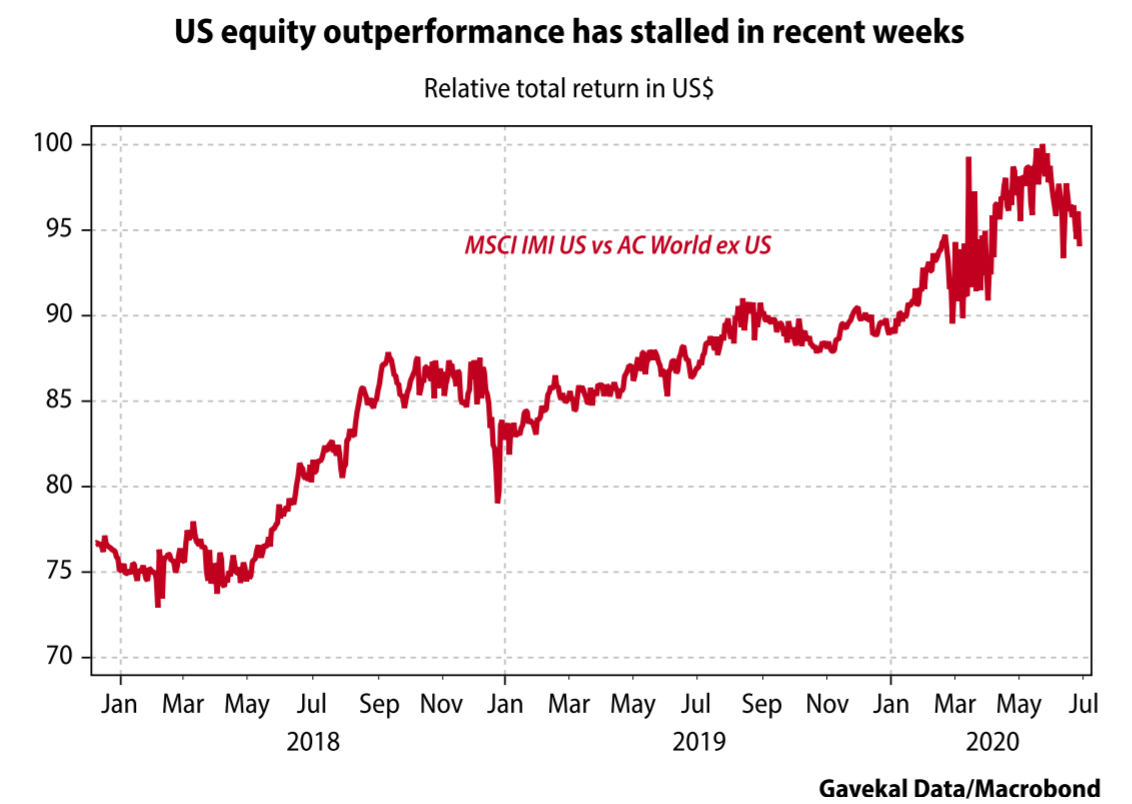 Such near-term underperformance may seem trivial given the US market’s massive outperformance of the past decade. Still, the fact it is occurring during rising markets and at a time when US retail investors are especially pumped up on “animal spirits” makes it noteworthy.
Unquestionably, the uncertainty of the political situation and the lack of clarity on the tax policies of a potential Biden administration, will likely be a Damocles sword over the head of US equity markets for months to come. And this at a time when policy risks in Europe, Japan and China seem to be abating. But beyond the short term back and forth of relative policy choices, a more important question is whether, after weeks of riots, the US still stands aloft as the “shining city on the hill” that President Ronald Reagan would frequently reference. In Clash of Civilizations, Samuel Huntington reduced humanity’s history down to the history of nine major civilizations, each finding its root in a distinct religion. Of these, Western civilization was founded on Judeo-Christian principles and on the importance of individuals acting within a framework of the law. Anyone who has ever read the New Testament gospels will quickly come to the conclusions that:
Such near-term underperformance may seem trivial given the US market’s massive outperformance of the past decade. Still, the fact it is occurring during rising markets and at a time when US retail investors are especially pumped up on “animal spirits” makes it noteworthy.
Unquestionably, the uncertainty of the political situation and the lack of clarity on the tax policies of a potential Biden administration, will likely be a Damocles sword over the head of US equity markets for months to come. And this at a time when policy risks in Europe, Japan and China seem to be abating. But beyond the short term back and forth of relative policy choices, a more important question is whether, after weeks of riots, the US still stands aloft as the “shining city on the hill” that President Ronald Reagan would frequently reference. In Clash of Civilizations, Samuel Huntington reduced humanity’s history down to the history of nine major civilizations, each finding its root in a distinct religion. Of these, Western civilization was founded on Judeo-Christian principles and on the importance of individuals acting within a framework of the law. Anyone who has ever read the New Testament gospels will quickly come to the conclusions that:
- As John Paul II was fond of saying, “God can only count to one”
- Every human has free will and will be held accountable for their actions
- Redemption and forgiveness is always a possibility
- Each citizen, from the poorest to the most powerful, is responsible for his or her own actions.
- Any citizen is presumed innocent until guilt has been proven beyond a reasonable doubt, and this guilt has been recognized by a jury of peers. Guilt is not assigned by the mob, by the media or by the powerful.
- Justice and the law are the same for all, including those who perform core functions for the state like the police, judges and politicians.
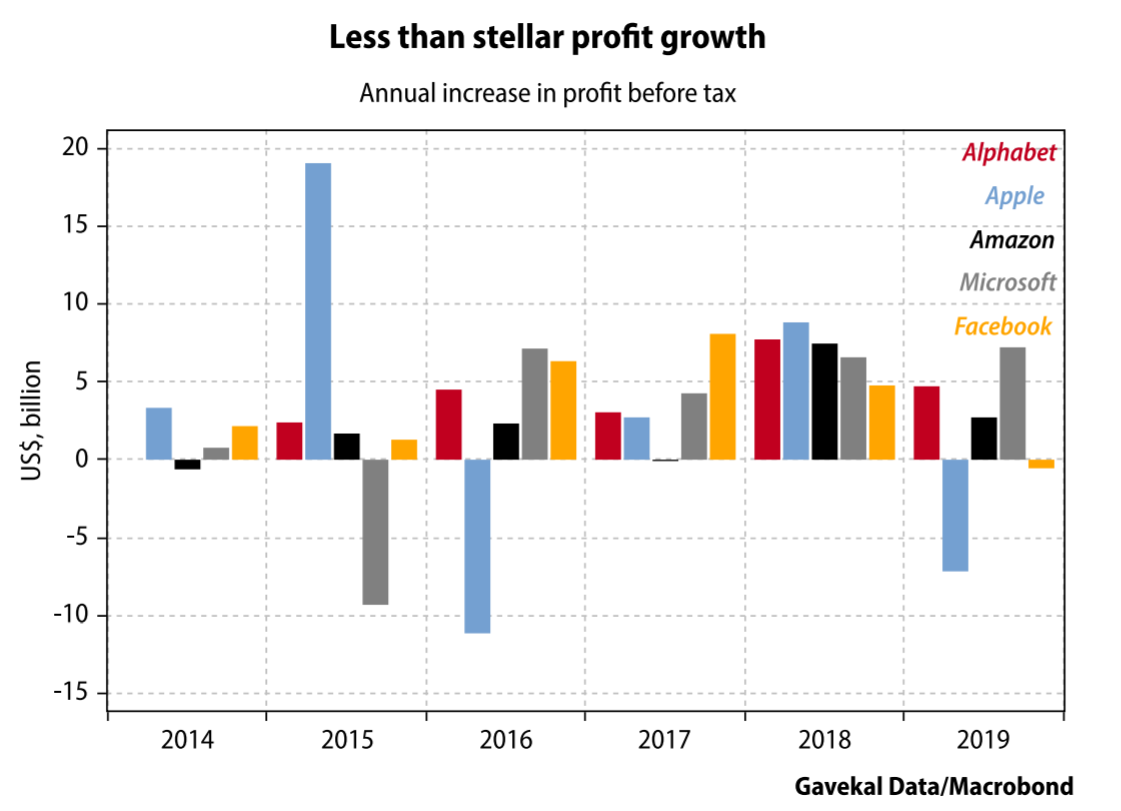
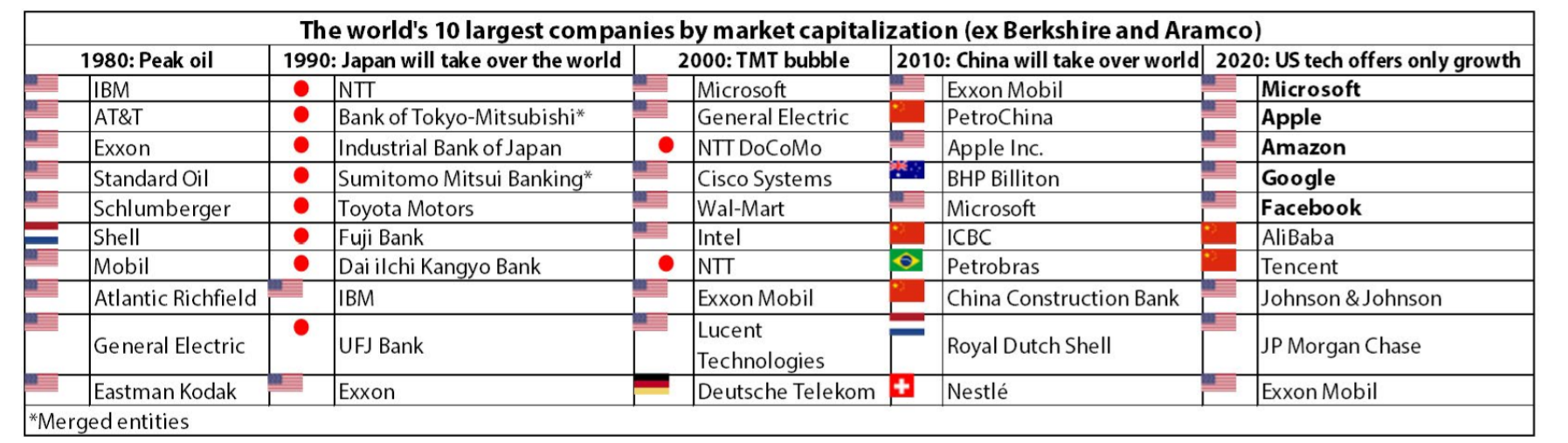 One challenge for very big companies is that in order to keep growing they eventually must capture someone else’s market. Such action tends to unleash expensive competitive warfare or, alternatively, trigger a regulatory backlash. In the case of Apple, operating profits peaked in 2015 at US$71bn and the lack of a new “must have” product has seen profits subsequently broadly stagnate.
Confronting this lack of growth, Apple is increasingly forced to “scrape the barrel” in a bid to justify an ever-expanding stock price valuation. Concretely, this means imposing a 30% tariff on businesses looking to expand their sales through the Apple App Store (see the recent Apple vs Hey controversy). And in time, such practice invites a regulatory backlash.
To put this another way, when Swiss Journalist Jacques Mallet du Pan was covering the French Revolution, he observed that “like Saturn, the revolution devours its children”. Today, no one can deny that the tech revolution has upended our work productivity, societies and social mores. Yet the fathers of this revolution seem to be increasingly turning on each other, whether it be:
One challenge for very big companies is that in order to keep growing they eventually must capture someone else’s market. Such action tends to unleash expensive competitive warfare or, alternatively, trigger a regulatory backlash. In the case of Apple, operating profits peaked in 2015 at US$71bn and the lack of a new “must have” product has seen profits subsequently broadly stagnate.
Confronting this lack of growth, Apple is increasingly forced to “scrape the barrel” in a bid to justify an ever-expanding stock price valuation. Concretely, this means imposing a 30% tariff on businesses looking to expand their sales through the Apple App Store (see the recent Apple vs Hey controversy). And in time, such practice invites a regulatory backlash.
To put this another way, when Swiss Journalist Jacques Mallet du Pan was covering the French Revolution, he observed that “like Saturn, the revolution devours its children”. Today, no one can deny that the tech revolution has upended our work productivity, societies and social mores. Yet the fathers of this revolution seem to be increasingly turning on each other, whether it be:
- Apple squeezing smaller tech companies through its App Store.
- Amazon aspiring to capture a large chunk of the advertising revenue that used to fall in the lap of Google and Facebook.
- Amazon and Netflix upending the way media is produced and consumed.
- Facebook and Twitter openly fighting about what a social media platform should, and should not, do.
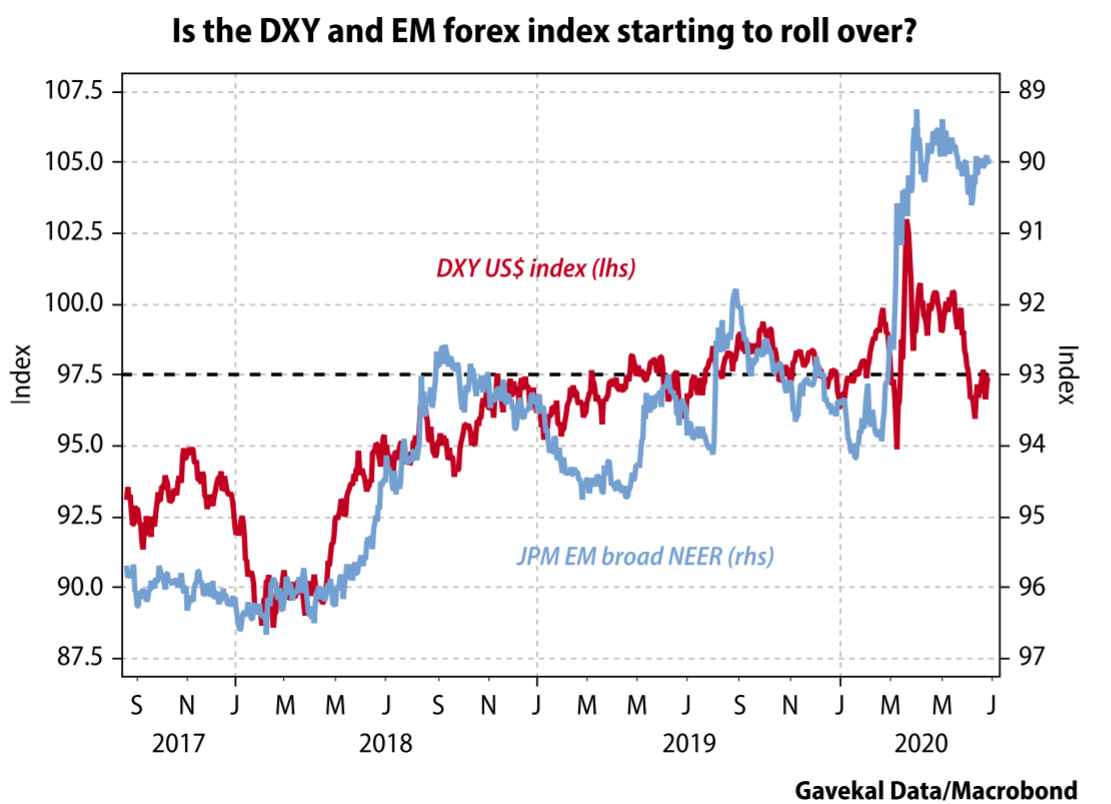
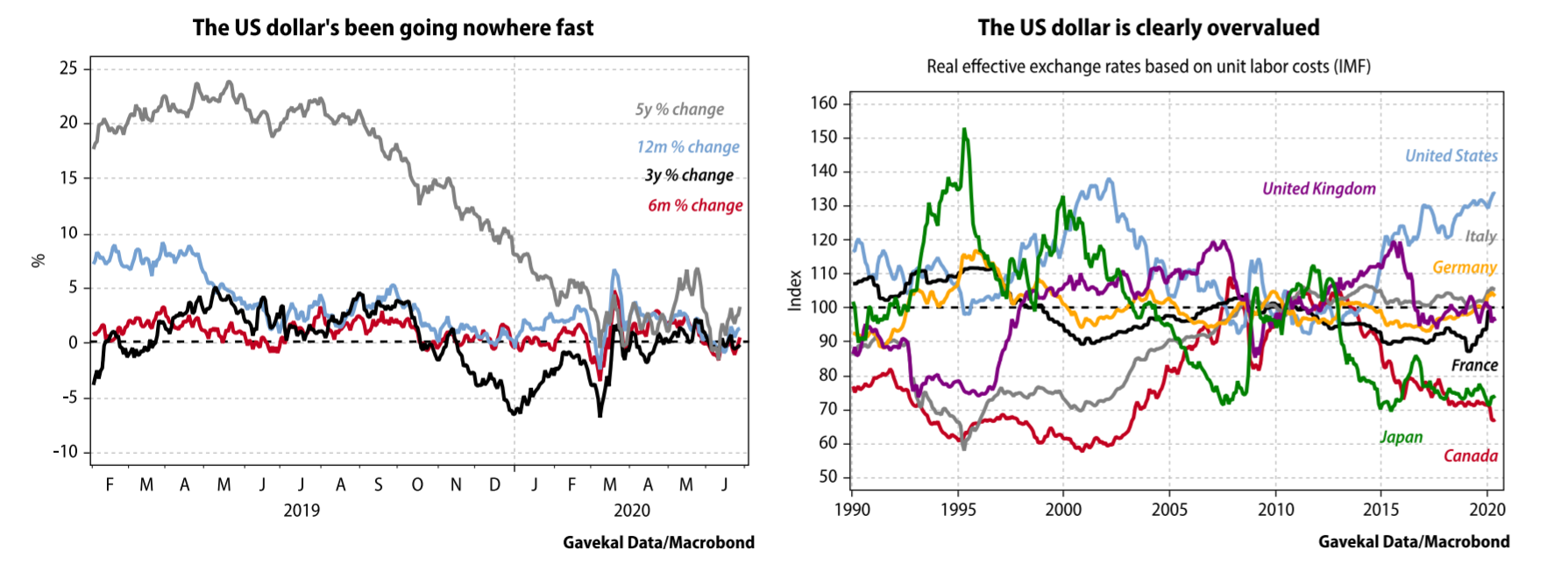 The US dollar’s outlook seems unlikely to change for the following reasons:
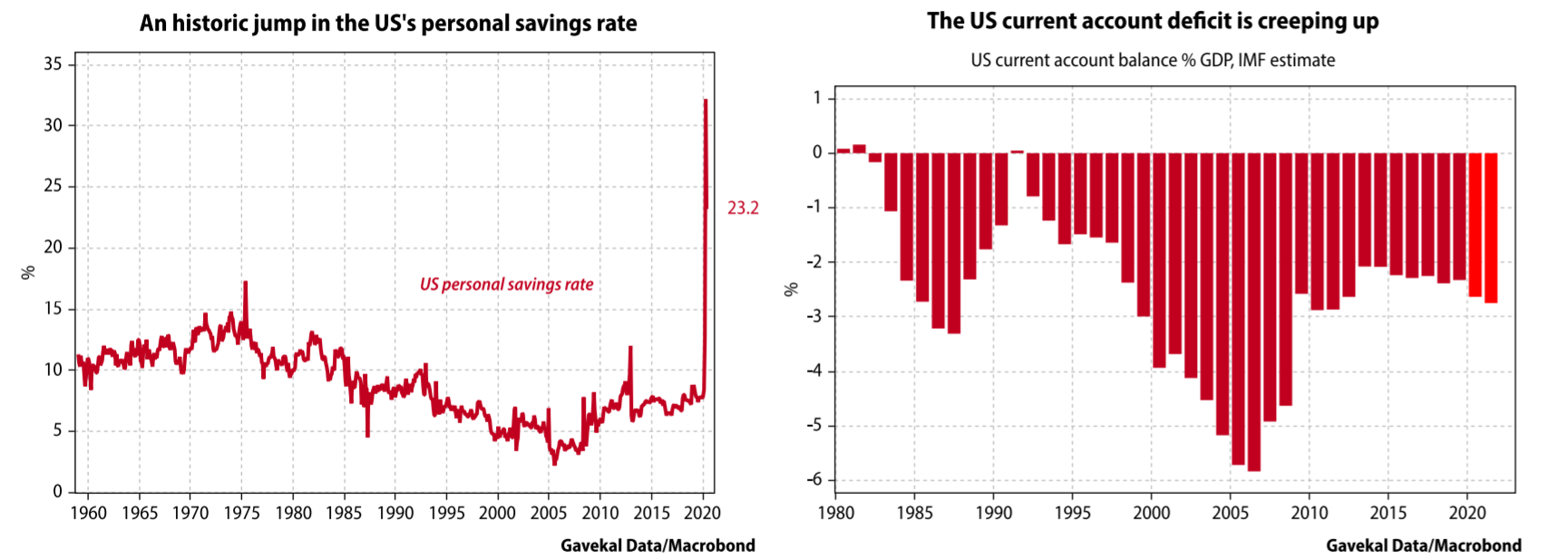
- The dollar is about as overvalued against its G7 peers as it has been for 30 years. Logically, such an overvaluation should mean a further deterioration in the US current account deficit.
- Growth in US monetary aggregates is outpacing that of “competing” currencies. If prices are set by the interaction of supply and demand, it is clear that there should be no concerns about the supply of US dollars.
- The US Treasury may be set to go on a big pre-election spending spree. A quick glance at its General Account (the US government’s “checking account”) shows an unusual set-up. In normal times, the Treasury keeps about US$250bn on hand to pay bills; today it has US$1.65trn. Why keep this “dry powder”, and will it be spent before or after November 3?
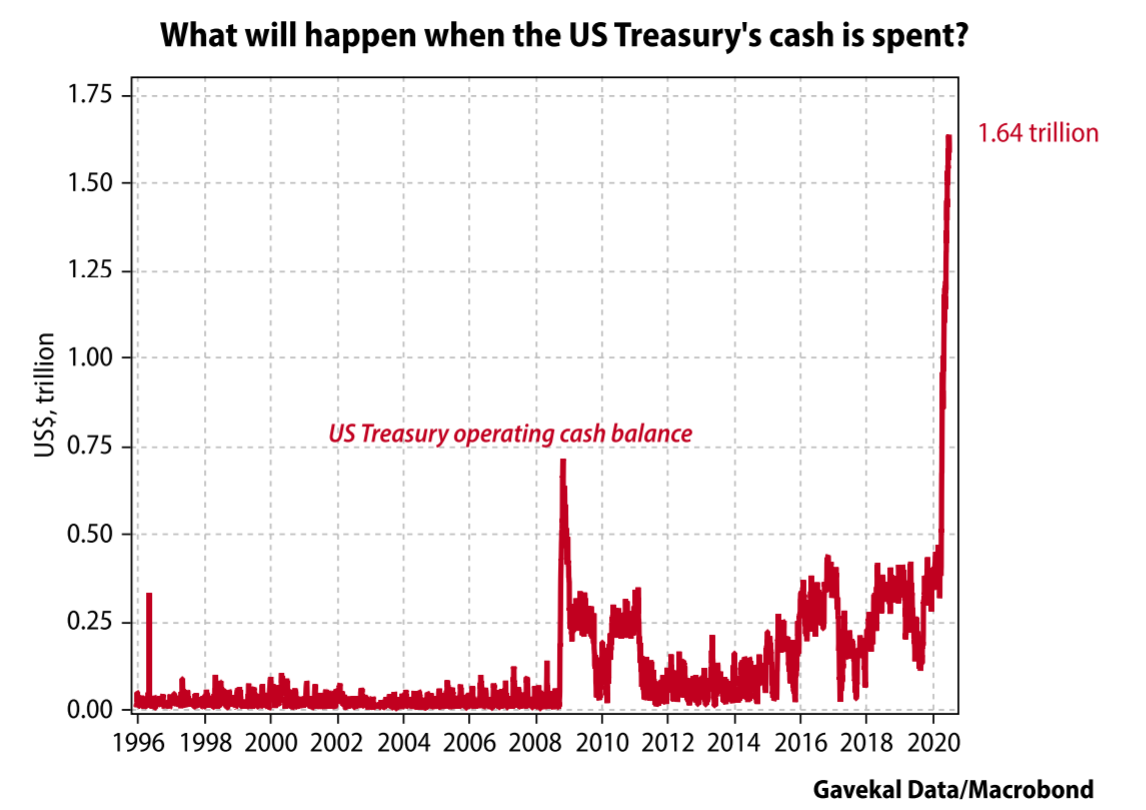 One doesn’t have to be excessively cynical to think Treasury Secretary Steven Mnuchin will open the fiscal floodgates before the election. The effect would be to unleash another surge of US liquidity, which will likely make its way abroad through a sharp widening of the US current account deficit. Such a possibility undermines talk of a further US dollar short squeeze.
A flood of dollars exiting the Treasury’s checking account could be amplified by money also leaving US consumers’ checking accounts. A key feature of the Covid-19 crisis has been much of the West’s working population staying at home. This has reduced spending on everything from restaurants to gasoline. The flip side has been burgeoning checking and savings accounts. Never before have Western countries in unison seen such a surge in savings rates as in the first half of this year. A key question is whether this money stays in US consumers’ bank accounts, or ends up being spent in an orgy of “revenge shopping” that is transferred to foreigners via the current account deficit.
One doesn’t have to be excessively cynical to think Treasury Secretary Steven Mnuchin will open the fiscal floodgates before the election. The effect would be to unleash another surge of US liquidity, which will likely make its way abroad through a sharp widening of the US current account deficit. Such a possibility undermines talk of a further US dollar short squeeze.
A flood of dollars exiting the Treasury’s checking account could be amplified by money also leaving US consumers’ checking accounts. A key feature of the Covid-19 crisis has been much of the West’s working population staying at home. This has reduced spending on everything from restaurants to gasoline. The flip side has been burgeoning checking and savings accounts. Never before have Western countries in unison seen such a surge in savings rates as in the first half of this year. A key question is whether this money stays in US consumers’ bank accounts, or ends up being spent in an orgy of “revenge shopping” that is transferred to foreigners via the current account deficit.
 If the latter scenario unfolds, the US currency is only likely to hold up by foreigners reinvesting their acquired dollars into US assets. This may occur if US equities can again outperform, or if investors come to believe that US tech really is the only growth game in town. In contrast, if US and European policymakers start to move against the tech firms then foreigners may think twice about recycling their earned US dollars back into the country.
In short, the supply of US dollars should not be a concern in the coming weeks and months. Putting it together, the picture is of rising supply and flat to falling demand. Such an unpromising outlook for the US dollar suggests that the next important move may be for a weakening to unfold. The only question left is whether this weakness has already started.
Foundation #5: Inflation is not a risk—not in the near term
Back in 2010 as the Fed embraced quantitative easing, many investors feared that inflation, or even hyper-inflation, would be unleashed. Comparisons were drawn to Venezuela, Zimbabwe and even Weimar Germany. Meanwhile, waiting for inflation became like waiting for Godot.
Just as success has many fathers, there were many reasons why inflation did not take off (my 2012 book Too Different for Comfort made this point). There was the collapse in energy prices linked to the shale revolution, the fall in monetary velocity as banks nursed their wounds and the post-2008 acceleration of globalization. The crisis pushed leaders to look for new solutions. They bypassed multilateral bodies like the World Bank, International Monetary Fund and World Trade Organization and instead created new institutions like the G20, Asian Infrastructure Investment Bank and the Silk Road Fund.
If the latter scenario unfolds, the US currency is only likely to hold up by foreigners reinvesting their acquired dollars into US assets. This may occur if US equities can again outperform, or if investors come to believe that US tech really is the only growth game in town. In contrast, if US and European policymakers start to move against the tech firms then foreigners may think twice about recycling their earned US dollars back into the country.
In short, the supply of US dollars should not be a concern in the coming weeks and months. Putting it together, the picture is of rising supply and flat to falling demand. Such an unpromising outlook for the US dollar suggests that the next important move may be for a weakening to unfold. The only question left is whether this weakness has already started.
Foundation #5: Inflation is not a risk—not in the near term
Back in 2010 as the Fed embraced quantitative easing, many investors feared that inflation, or even hyper-inflation, would be unleashed. Comparisons were drawn to Venezuela, Zimbabwe and even Weimar Germany. Meanwhile, waiting for inflation became like waiting for Godot.
Just as success has many fathers, there were many reasons why inflation did not take off (my 2012 book Too Different for Comfort made this point). There was the collapse in energy prices linked to the shale revolution, the fall in monetary velocity as banks nursed their wounds and the post-2008 acceleration of globalization. The crisis pushed leaders to look for new solutions. They bypassed multilateral bodies like the World Bank, International Monetary Fund and World Trade Organization and instead created new institutions like the G20, Asian Infrastructure Investment Bank and the Silk Road Fund.
 The 2008 crisis unleashed an epic infrastructure boom across China that added an additional 500mn Chinese workers to the global workforce. Before 2008, foreign firms had to pretty much locate factories in the Pearl River Delta, Shanghai or Wenzhou. Fast forward a few years and Chinese manufacturing could as easily be done in Zhengzhou, Chongqing, or Wuhan.
Unfortunately, the main revelation of 2020 is that the low price offered by facilities in Wuhan and similar cities was “false” as it did not factor in negative externalities from wildlife markets with dubious hygiene. The corollary of prices of the last decade being shown to be artificially low is that future prices will have to adjust higher. The implication is that the deflationary forces of the last decade cannot be relied upon to remain dominant.
The 2008 crisis unleashed an epic infrastructure boom across China that added an additional 500mn Chinese workers to the global workforce. Before 2008, foreign firms had to pretty much locate factories in the Pearl River Delta, Shanghai or Wenzhou. Fast forward a few years and Chinese manufacturing could as easily be done in Zhengzhou, Chongqing, or Wuhan.
Unfortunately, the main revelation of 2020 is that the low price offered by facilities in Wuhan and similar cities was “false” as it did not factor in negative externalities from wildlife markets with dubious hygiene. The corollary of prices of the last decade being shown to be artificially low is that future prices will have to adjust higher. The implication is that the deflationary forces of the last decade cannot be relied upon to remain dominant.
 Conclusion
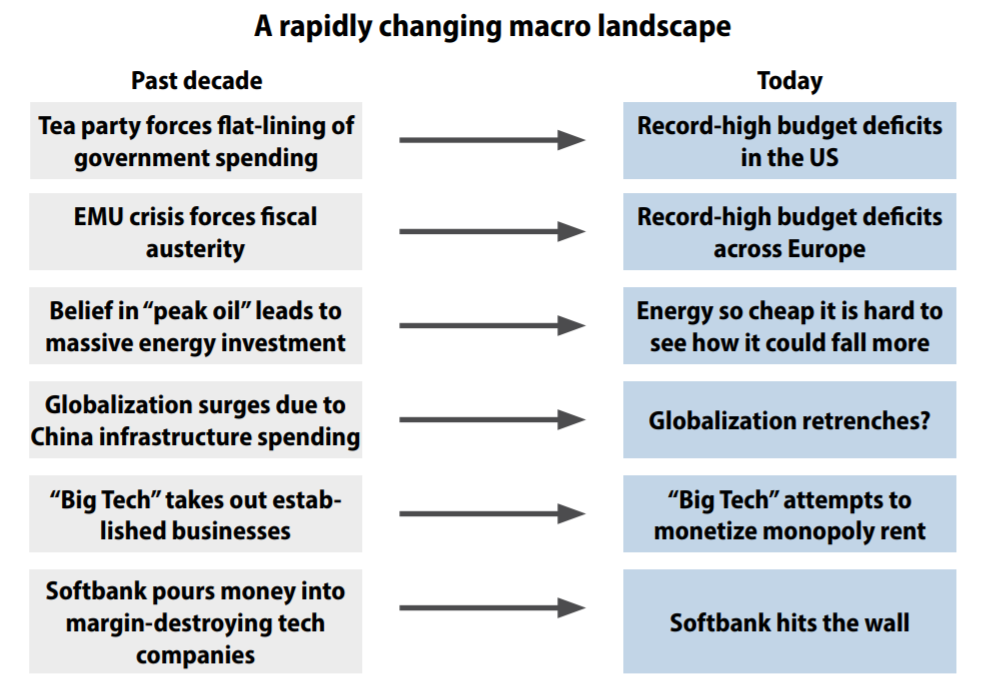
The fact the macro landscape is changing fast should not surprise us given fiscal and monetary stimulus, rising geopolitical tensions, lower energy prices and an uncertain global growth outlook. Thus, it seems unsatisfactory to explain the Nasdaq being just above its pre-Covid-19 level by the world looking at “more of the same”. This leaves two other explanations for the post-March 23 rally, namely, (i) investors have taken leave of their senses, or (ii) investors are acting on the premise that cash may become worthless in the coming years. I will review both possibilities in upcoming papers.
DISCLOSURE: This material has been prepared or is distributed solely for informational purposes only and is not a solicitation or an offer to buy any security or instrument or to participate in any trading strategy. Any opinions, recommendations, and assumptions included in this presentation are based upon current market conditions, reflect our judgment as of the date of this presentation, and are subject to change. Past performance is no guarantee of future results. All investments involve risk including the loss of principal. All material presented is compiled from sources believed to be reliable, but accuracy cannot be guaranteed and Evergreen makes no representation as to its accuracy or completeness. Securities highlighted or discussed in this communication are mentioned for illustrative purposes only and are not a recommendation for these securities. Evergreen actively manages client portfolios and securities discussed in this communication may or may not be held in such portfolios at any given time.
Conclusion
The fact the macro landscape is changing fast should not surprise us given fiscal and monetary stimulus, rising geopolitical tensions, lower energy prices and an uncertain global growth outlook. Thus, it seems unsatisfactory to explain the Nasdaq being just above its pre-Covid-19 level by the world looking at “more of the same”. This leaves two other explanations for the post-March 23 rally, namely, (i) investors have taken leave of their senses, or (ii) investors are acting on the premise that cash may become worthless in the coming years. I will review both possibilities in upcoming papers.
DISCLOSURE: This material has been prepared or is distributed solely for informational purposes only and is not a solicitation or an offer to buy any security or instrument or to participate in any trading strategy. Any opinions, recommendations, and assumptions included in this presentation are based upon current market conditions, reflect our judgment as of the date of this presentation, and are subject to change. Past performance is no guarantee of future results. All investments involve risk including the loss of principal. All material presented is compiled from sources believed to be reliable, but accuracy cannot be guaranteed and Evergreen makes no representation as to its accuracy or completeness. Securities highlighted or discussed in this communication are mentioned for illustrative purposes only and are not a recommendation for these securities. Evergreen actively manages client portfolios and securities discussed in this communication may or may not be held in such portfolios at any given time.