

Click here to view as PDF. “Everyone imagined that the passion for tulips would last forever, and that the wealthy from every part of the world would send to Holland, and pay whatever prices were asked for them.” -CHARLES MACKAY in his classic 1841 book, Extraordinary Popular Delusions and The Madness of Crowds “There are no new eras, excesses are never permanent.” -Famed stock market technician BOB FARRELL “Whenever I think of the past, it brings back so many memories.” -Comedian STEVEN WRIGHT
INTRODUCTION
And now for something completely different… It’s time for a couple of firsts. The first “first” is that I’ve never before written an introduction to an introduction. The second is that I’ve never attempted to self-publish a book in real-time*. Frankly, this entire effort may bomb for a number of reasons, all of which will be highly embarrassing to yours truly. For now, but subject to change at any time, I’ve decided to call my book “Bubble 3.0” with the not so catchy sub-title of “How central banks created the next financial crisis”. (Yes, another reason to hate sub-titles!) The basic idea, as you can readily surmise, is that we are going through the third iteration of an artificial asset inflation cycle that has reached highly dangerous levels, in my humble (and getting humbler) opinion. Going forward, the outcome that would be the most humiliating to me would be if we are not, as I believe, involved in a bubble three-peat but, rather, merely a series of long-running bull markets in the major asset classes of stocks, bonds, and real estate. Further, in the event these all gently morph into mere corrections or mild bear markets, I will be wearing a four-egg omelet on my face. While that scenario is possible, I remain convinced we are in the midst of something much more extreme. But for me to be proven right, this era must eventually need to be seen as the inglorious successor to Bubbles 1.0 (tech) and 2.0 (housing). Otherwise, I will be the first to concede I have been guilty of poor judgment and overreaction. Regular EVA readers are aware I’ve struck my neck out even further by referring to what we are going through presently as the Biggest Bubble Ever (BBE), an assertion I will do my best to defend in my new book. But, again, the proof will be in the unfolding—or unwinding—regardless of how convincing a case I make. It is not lost on me that should I be right a lot of innocent people may suffer. My hope is that what lies ahead is a replay of October 1987, when financial market excesses were forcefully extinguished, almost overnight, without hurting the real economy. However, my overriding fear is that with so much leverage having been lathered on for many years, the odds don’t favor that outcome, much as I pray I’m wrong. A key reason I am choosing to run this on an as-written basis is to get a jump on what I think might be the early stages of the deflation of the Biggest Bubble Ever. In my mind, what happened with Bitcoin and the other so-called crypto-currencies was a reflection of the intensity of the speculative mentality that has dominated recent years. However, I also feel the breathtaking Bitcoin boom and bust provides a sneak-preview of what is likely to follow – on a less extreme basis – for the Big Three: stocks, bonds and real estate, which, collectively, are trading at the highest levels in recorded history. But the times, they are a changin’. No up-market in history has lasted longer than nine and a half years and this one will attain that age in a few more months—unless, that is, something comes along to trip up this incredibly powerful bull than has run so far, so fast, and for so long. *However, I have written another book—mostly unrelated to financial markets—that is due to be published this spring; more on that to follow in an upcoming EVA.Bubble 3.0: How Central Banks Created the Next Financial Crisis
Introduction This book is, frankly, a foolish undertaking in several ways. The first ill-advised aspect is in challenging the wisdom of those central bankers whom the celebrated financial writer Jim Grant refers to as the planet’s “monetary mandarins”. After all, as I write this book—and am simultaneously publishing it in our firm’s on-line newsletter, the Evergreen Virtual Adviser—these lords of money look to have been victorious in coping with the aftermath of the Global Financial Crisis. (That none of them anticipated the cataclysm of a decade ago is another matter, though it does raise interesting questions about their current image of infallibility). The second imprudent element is my overarching assumption that another financial disaster looms ahead. My only attempt to mitigate such recklessness is that I’m taking Warren Buffett’s advice about never combining a forecast and a date. Thus, I’m not saying when the invoice for ill-advised central bank policies will come due, just that a price will most certainly need to be paid. Another foolhardy feature of my project is alleging that the measures taken by entities such as America’s Federal Reserve, the European Central Bank, the Bank of Japan, the Bank of England, and, most remarkably as we will see, the Swiss National Bank, were indeed “ill-advised”. Yet, if the reader of this book doesn’t come to view them as such then I will have miserably failed in my efforts. And not for the first time in my career, I might add. Readers should be aware that I’ve had a long-running and contentious relationship with bubbles. My life in the financial industry began in 1979 when Jimmy Carter was president and inflation was the scourge du jour. For those readers old enough to remember, I’m not referring to the persistent double-digit price rises we have seen in almost all asset values in recent years but rather of the CPI variety. Back in the Carter era, it appeared as though the cost-of-living index was destined to continue rising at an accelerating rate, as it had done for most of the prior 15 years. That trend, coupled with the concomitant surge by interest rates to unprecedented levels (yields on short-term debt securities exceeded 20% in 1981 during the first year of Ronald Reagan’s presidency) proved to be a toxic combination for US stocks. But those unparalleled rates, engineered by then-Fed chairman Paul Volcker, produced the intended effect. For the first time in a generation, inflation began to crack—and crack hard. By August of 1982, with the Dow Jones trading at seven times its trailing twelve months earnings (versus over 20 as I write this text), the stage was set for the greatest bull market of all-time. But come the fall of 1987, the market’s P/E ratio had tripled to over 20 and euphoria had replaced despondency among investors. Inflation was rising as were interest rates. Yet, those threats did little to dispel the market’s incessant march higher, even as computerized trading and a supposedly risk-mitigating strategy called portfolio insurance came to dominate activity (interestingly, similar forces are at work in early 2018). The infamous crash of 1987 hit in October of that year, bringing US stock prices down 30% in just a few trading sessions. This was despite an economy growing at a rate three times as fast as the 2% snail’s pace that has characterized the current post-crisis expansion. As rates on US treasuries crashed in the wake of the 1987 panic and the economy remained robust, stocks quickly regained their lost ground despite widespread fears of a replay of the Great Depression. In short order, lofty valuations were restored. However, the real action was occurring half-way around the world from Wall Street, in the land of the rising sun and even more rising asset prices. It was during the late 1980s that the ground under the Imperial Palace in Tokyo was supposedly worth more than all the real estate in California. The main Japanese stock index—the Nikkei—was trading at a price/earnings (P/E) ratio of roughly 70. It was a bubble such as the world hadn’t seen since the late 1920s. The absurdity of the prices for Japanese stocks and property caused me, for the first time, to find myself in a bubble-busting state of mind. Unfortunately, I had come to believe Japanese shares were ridiculously over-priced in 1988 when the Nikkei was trading at 20,000 (by the way, as recently as 2015, it was still trading at 20,000!). My belief caused me to urge my clients to sell their positions in some of Japan’s leading companies that I had bought for them in pre-euphoric times. Once this monstrous speculative frenzy climaxed, the Nikkei rose another 100%, topping out at roughly 40,000 and the aforementioned 70 times earnings. Suffice to say I sold a tad prematurely. The reason I rehash this thirty-year old episode, besides being my initial encounter with an unadulterated bubble, was that it proved to be the pattern of my bubble-opposing efforts—being painfully and embarrassingly early in my predictions of the ultimate reckoning. Little did I know at the time that the world—which had largely been bubble-free since the late ‘20s, with a few minor exceptions—was destined to be caught up in a series of these strange phenomena over the next thirty years. And I was fated to repeatedly cast myself in the role of Dour Dave, Davie Downer, Doubting David, or any other denigrating characterization of my unwillingness to play along with the prevailing giddiness—always at great cost to my psyche and reputation. Chapter 1 It seems appropriate to start the main body of this book with a basic question: What is a bubble anyway? Some wags have suggested that a bull market is one in which an investor is a participant while a bubble is one in which he or she isn’t invested. Despite its whimsical tone, I think there is a lot of truth in this simple saying. Over the years, and through serial bubble events, I’ve repeatedly witnessed the extreme logic contortions supposed market gurus go to in order to rationalize nonsensical valuations. Why? Because rampaging bull markets are good, if not great, for business—and bonuses—as discussed below. To witness this process in action, you might go into the CNBC video archives and watch the parade of pundits on that station in late 2017 as they justified the mania in crypto-currencies. Even as the price of Bitcoin hit $20,000, there was an endless string of self-anointed experts who explained to the CNBC interviewers (some of whom were commendably skeptical) as to why and how the “cryptos” were likely to continue soaring. As prices on the cryptos went vertical in the fourth quarter of 2017, it was nearly impossible to read or watch any financial news story or show without being continually bombarded by articles or spots about Bitcoin and its less famous clones. The steeper the slope of the ascent, the more the investing public and the media raved about this remarkable phenomenon. And phenomenal it was, as you can see from the following chart.Figure 1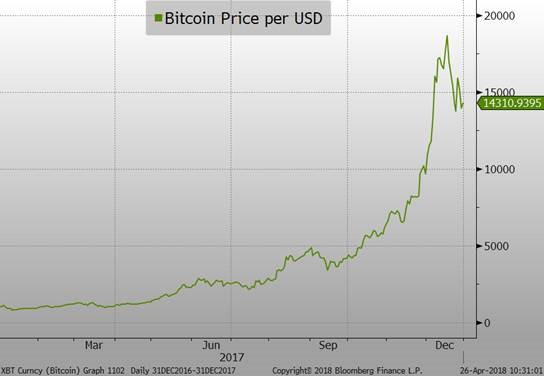 Source: Bloomberg, Evergreen Gavekal (Jan. 1 – Dec. 31, 2017)
Figure 2
Figure 3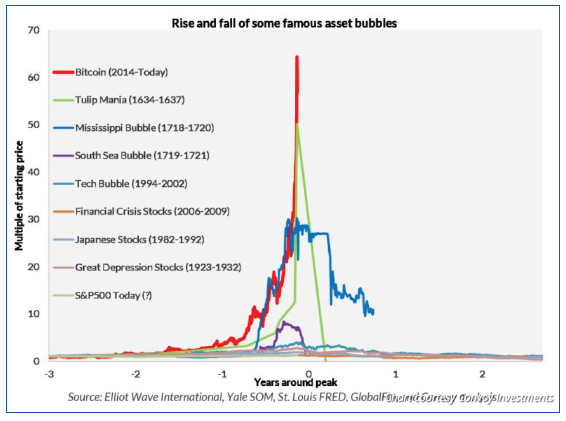
Figure 4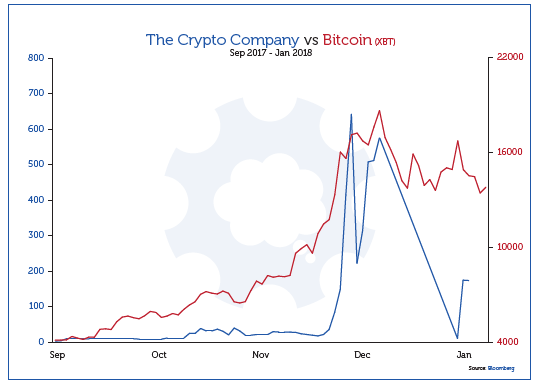
Figure 5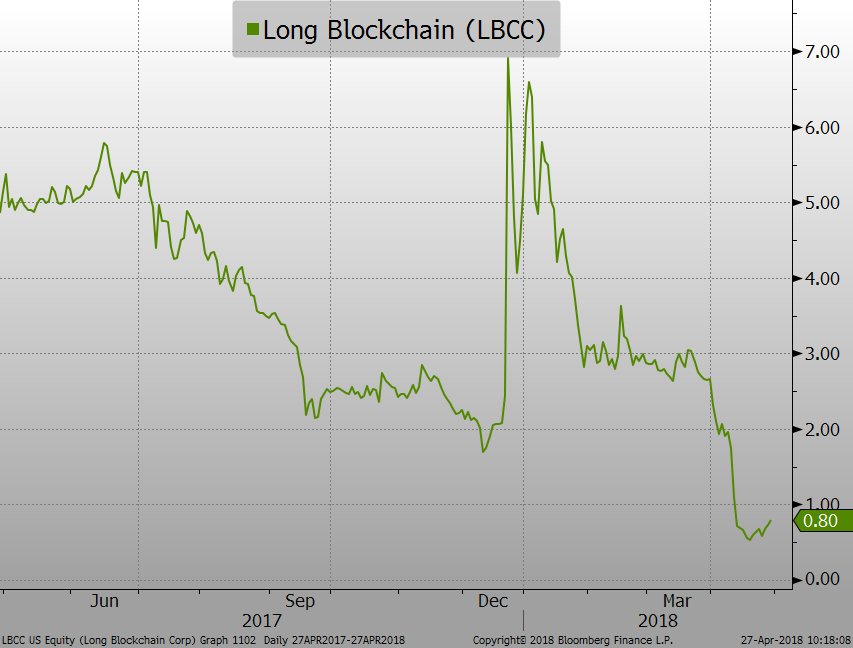 Source: Bloomberg, Evergreen Gavekal (April 27, 2017 – April 27, 2018)
Figure 6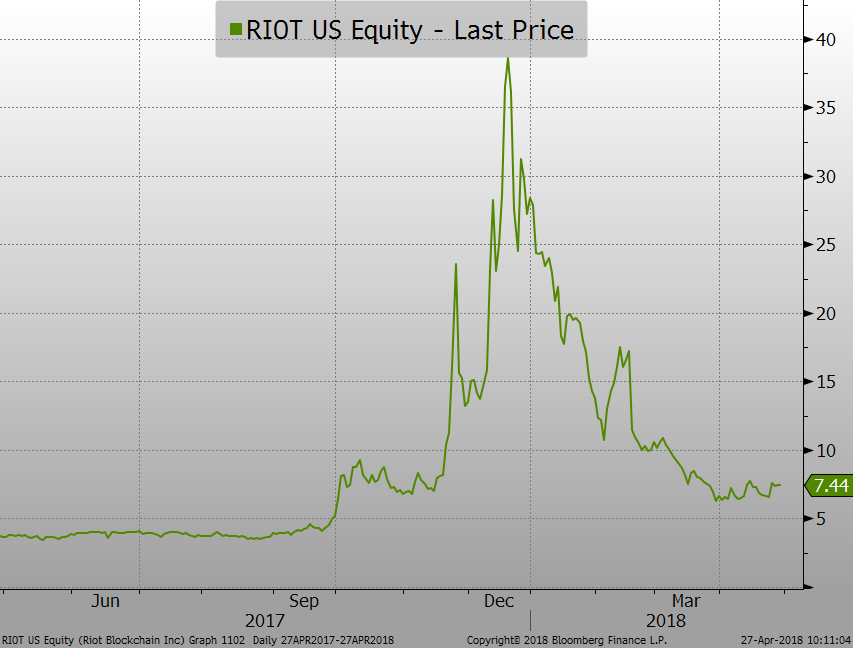 Source: Bloomberg, Evergreen Gavekal (April 27, 2017 – April 27, 2018)
Figure 7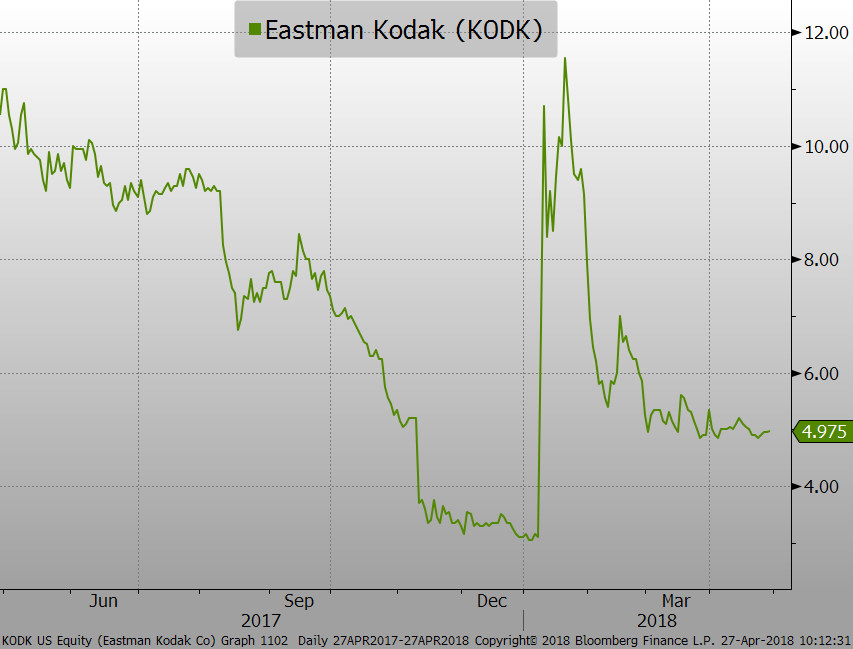 Source: Bloomberg, Evergreen Gavekal (April 27, 2017 – April 27, 2018)
Figure 8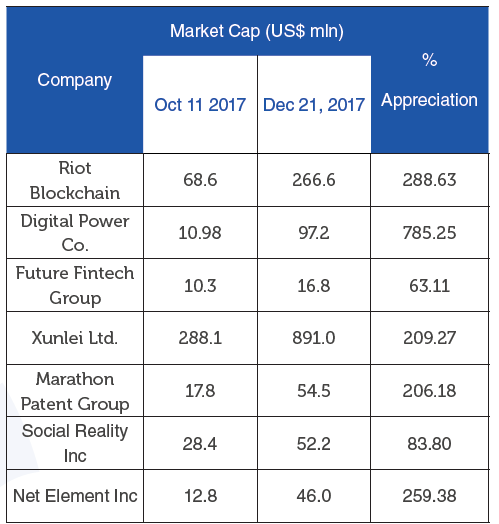
Figure 9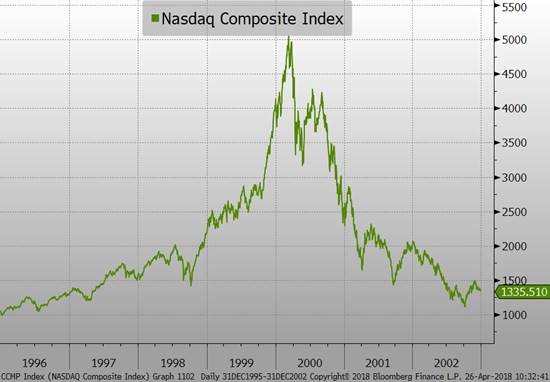 Source: Bloomberg, Evergreen Gavekal (Dec. 31, 1995 – Dec. 31, 2002)
Figure 10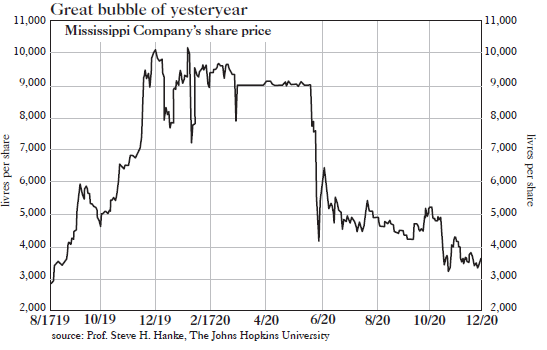

OUR CURRENT LIKES AND DISLIKES
Changes highlighted in bold.
LIKE
- Large-cap growth (during a deeper correction)
- International developed markets (during a deeper correction)
- Cash
- Publicly-traded pipeline partnerships (MLPs) yielding 7%-12% (use the recent additional weakness as a buying opportunity)
- Gold-mining stocks
- Gold
- Select blue chip oil stocks
- Mexican stocks (at lower prices after this year’s robust rally)
- Bonds denominated in renminbi trading in Hong Kong (dim sum bonds)
- Short euro ETF (due to the euro’s weakness of late, refrain from initiating or adding to this short)
- Investment-grade floating rate corporate bonds
- One- to two-year Treasury notes
- Canadian dollar-denominated short-term bonds
NEUTRAL
- Most cyclical resource-based stocks
- Short-term investment grade corporate bonds
- Mid-cap growth
- Emerging stock markets, however a number of Asian developing markets, ex-India, appear undervalued
- Select European banks
- BB-rated corporate bonds (i.e., high-quality, high yield)
- Long-term Treasury bonds
- Long-term investment grade corporate bonds
- Intermediate-term Treasury bonds
- Long-term municipal bonds
- Emerging bond markets (dollar-based or hedged); local currency in a few select cases
- Solar Yield Cos (taking partial profits on these)
- Large-cap value
- Canadian REITs
- Intermediate-term investment-grade corporate bonds, yielding approximately 4%
- Intermediate municipal bonds with strong credit ratings
- US-based Real Estate Investment Trusts (REITs) (once again, some small-and mid-cap issues appear attractive; also, some retail-exposed REITs look deeply undervalued)
- Short yen ETF (in fact, the yen looks poised to rally)
DISLIKE
- Small-cap value
- Mid-cap value
- Small-cap growth
- Lower-rated junk bonds
- Emerging market bonds (local currency)
- Emerging market bonds (local currency)
- Floating-rate bank debt (junk)
- US industrial machinery stocks (such as one that runs like a certain forest animal, and another famous for its yellow-colored equipment)
- Preferred stocks
DISCLOSURE: This material has been prepared or is distributed solely for informational purposes only and is not a solicitation or an offer to buy any security or instrument or to participate in any trading strategy. Any opinions, recommendations, and assumptions included in this presentation are based upon current market conditions, reflect our judgment as of the date of this presentation, and are subject to change. Past performance is no guarantee of future results. All investments involve risk including the loss of principal. All material presented is compiled from sources believed to be reliable, but accuracy cannot be guaranteed and Evergreen makes no representation as to its accuracy or completeness. Securities highlighted or discussed in this communication are mentioned for illustrative purposes only and are not a recommendation for these securities. Evergreen actively manages client portfolios and securities discussed in this communication may or may not be held in such portfolios at any given time.