

Click here to view as PDF. “We always overestimate the change that will occur in the next two years and underestimate the change that will occur in the next ten.” -BILL GATES
INTRODUCTION
On September 22, 2017 we ran a piece from one of our trusted partners at Gavekal titled “Robots Everywhere, But the Statistics.” The main purpose of the research was to call out an area where real-world data didn’t jive with widespread belief. In a similar vein, this week’s Guest EVA comes from the voice of a world-renowned expert in the field of Artificial Intelligence (AI), Rodney Brooks. Mr. Brooks, the esteemed Panasonic Professor of Robotics at MIT and founder of Rethink Robotics, warns against the “ludicrous” – his word, not mine – claim that the rapid speed of advancements in AI will have a near-term impact on the number of jobs available to human workers. He combats this claim by identifying seven common mistakes in AI predictions. Technology is moving fast; there’s no doubt about that. There will be job displacement. Many workers will need to lean into high-tech education over the next several decades to ensure they are not left behind in the rapidly evolving information age. But the alarm around technological breakthroughs leading to an Armageddon-like jobs scenario is likely overblown, as the pages below outline. Please enjoy this truly insightful work from one of the world’s most respected experts on robotics and Artificial Intelligence. (Note: The Seven Deadly Sins of AI Predictions originally ran on RodneyBrooks.com, and was later published in MIT Technology Review.)
THE SEVEN DEADLY SINS OF AI PREDICTIONS By Rodney Brooks We are surrounded by hysteria about the future of artificial intelligence and robotics—hysteria about how powerful they will become, how quickly, and what they will do to jobs. I recently saw a story in MarketWatch that said robots will take half of today’s jobs in 10 to 20 years. It even had a graphic to prove the numbers. The claims are ludicrous. (I try to maintain professional language, but sometimes …) For instance, the story appears to say that we will go from one million grounds and maintenance workers in the U.S. to only 50,000 in 10 to 20 years, because robots will take over those jobs. How many robots are currently operational in those jobs? Zero. How many realistic demonstrations have there been of robots working in this arena? Zero. Similar stories apply to all the other categories where it is suggested that we will see the end of more than 90 percent of jobs that currently require physical presence at some particular site. Mistaken predictions lead to fears of things that are not going to happen, whether it’s the wide-scale destruction of jobs, the Singularity, or the advent of AI that has values different from ours and might try to destroy us. We need to push back on these mistakes. But why are people making them? I see seven common reasons. 1. Overestimating and underestimating Roy Amara was a cofounder of the Institute for the Future, in Palo Alto, the intellectual heart of Silicon Valley. He is best known for his adage now referred to as Amara’s Law:
“We tend to overestimate the effect of a technology in the short run and underestimate the effect in the long run.”There is a lot wrapped up in these 21 words. An optimist can read it one way, and a pessimist can read it another. A great example of the two sides of Amara’s Law is the U.S. Global Positioning System. Starting in 1978, a constellation of 24 satellites (now 31 including spares) were placed in orbit. The goal of GPS was to allow precise delivery of munitions by the U.S. military. But the program was nearly canceled again and again in the 1980s. The first operational use for its intended purpose was in 1991 during Desert Storm; it took several more successes for the military to accept its utility. Today GPS is in what Amara would call the long term, and the ways it is used were unimagined at first. My Series 2 Apple Watch uses GPS while I am out running, recording my location accurately enough to see which side of the street I run along. The tiny size and price of the receiver would have been incomprehensible to the early GPS engineers. The technology synchronizes physics experiments across the globe and plays an intimate role in synchronizing the U.S. electrical grid and keeping it running. It even allows the high-frequency traders who really control the stock market to mostly avoid disastrous timing errors. It is used by all our airplanes, large and small, to navigate, and it is used to track people out of prison on parole. It determines which seed variant will be planted in which part of many fields across the globe. It tracks fleets of trucks and reports on driver performance. GPS started out with one goal, but it was a hard slog to get it working as well as was originally expected. Now it has seeped into so many aspects of our lives that we would not just be lost if it went away; we would be cold, hungry, and quite possibly dead. We see a similar pattern with other technologies over the last 30 years. A big promise up front, disappointment, and then slowly growing confidence in results that exceed the original expectations. This is true of computation, genome sequencing, solar power, wind power, and even home delivery of groceries. AI has been overestimated again and again, in the 1960s, in the 1980s, and I believe again now, but its prospects for the long term are also probably being underestimated. The question is: How long is the long term? The next six errors help explain why the time scale is being grossly underestimated for the future of AI. 2. Imagining magic When I was a teenager, Arthur C. Clarke was one of the “big three” science fiction writers, along with Robert Heinlein and Isaac Asimov. But Clarke was also an inventor, a science writer, and a futurist. Between 1962 and 1973 he formulated three adages that have come to be known as Clarke’s Three Laws:
- When a distinguished but elderly scientist states that something is possible, he is almost certainly right. When he states that something is impossible, he is very probably wrong.
- The only way of discovering the limits of the possible is to venture a little way past them into the impossible.
- Any sufficiently advanced technology is indistinguishable from magic.
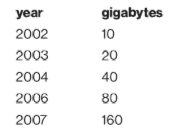 Then I would extrapolate a few years out and ask what we would do with all that memory in our pockets.
Extrapolating through to today, we would expect a $400 iPod to have 160,000 gigabytes of memory. But the top iPhone of today (which costs much more than $400) has only 256 gigabytes of memory, less than double the capacity of the 2007 iPod. This particular exponential collapsed very suddenly once the amount of memory got to the point where it was big enough to hold any reasonable person’s music library and apps, photos, and videos. Exponentials can collapse when a physical limit is hit, or when there is no more economic rationale to continue them.
Similarly, we have seen a sudden increase in performance of AI systems thanks to the success of deep learning. Many people seem to think that means we will continue to see AI performance increase by equal multiples on a regular basis. But the deep-learning success was 30 years in the making, and it was an isolated event.
That does not mean there will not be more isolated events, where work from the backwaters of AI research suddenly fuels a rapid-step increase in the performance of many AI applications. But there is no “law” that says how often they will happen.
6. Hollywood scenarios
The plot for many Hollywood science fiction movies is that the world is just as it is today, except for one new twist.
In Bicentennial Man, Richard Martin, played by Sam Neill, sits down to breakfast and is waited upon by a walking, talking humanoid robot, played by Robin Williams. Richard picks up a newspaper to read over breakfast. A newspaper! Printed on paper. Not a tablet computer, not a podcast coming from an Amazon Echo–like device, not a direct neural connection to the Internet.
It turns out that many AI researchers and AI pundits, especially those pessimists who indulge in predictions about AI getting out of control and killing people, are similarly imagination-challenged. They ignore the fact that if we are able to eventually build such smart devices, the world will have changed significantly by then. We will not suddenly be surprised by the existence of such super-intelligences. They will evolve technologically over time, and our world will come to be populated by many other intelligences, and we will have lots of experience already.
Long before there are evil super-intelligences that want to get rid of us, there will be somewhat less intelligent, less belligerent machines. Before that, there will be really grumpy machines. Before that, quite annoying machines. And before them, arrogant, unpleasant machines. We will change our world along the way, adjusting both the environment for new technologies and the new technologies themselves. I am not saying there may not be challenges. I am saying that they will not be sudden and unexpected, as many people think.
7. Speed of deployment
New versions of software are deployed very frequently in some industries. New features for platforms like Facebook are deployed almost hourly. For many new features, as long as they have passed integration testing, there is very little economic downside if a problem shows up in the field and the version needs to be pulled back. This is a tempo that Silicon Valley and Web software developers have gotten used to. It works because the marginal cost of newly deploying code is very, very close to zero.
Deploying new hardware, on the other hand, has significant marginal costs. We know that from our own lives. Many of the cars we are buying today, which are not self-driving, and mostly are not software-enabled, will probably still be on the road in the year 2040. This puts an inherent limit on how soon all our cars will be self-driving. If we build a new home today, we can expect that it might be around for over 100 years. The building I live in was built in 1904, and it is not nearly the oldest in my neighborhood.
Capital costs keep physical hardware around for a long time, even when there are high-tech aspects to it, and even when it has an existential mission.
The U.S. Air Force still flies the B-52H variant of the B-52 bomber. This version was introduced in 1961, making it 56 years old. The last one was built in 1962, a mere 55 years ago. Currently these planes are expected to keep flying until at least 2040, and perhaps longer—there is talk of extending their life to 100 years.
I regularly see decades-old equipment in factories around the world. I even see PCs running Windows 3.0—a software version released in 1990. The thinking is “If it ain’t broke, don’t fix it.” Those PCs and their software have been running the same application doing the same task reliably for over two decades.
The principal control mechanism in factories, including brand-new ones in the U.S., Europe, Japan, Korea, and China, is based on programmable logic controllers, or PLCs. These were introduced in 1968 to replace electromechanical relays. The “coil” is still the principal abstraction unit used today, and PLCs are programmed as though they were a network of 24volt electromechanical relays. Still. Some of the direct wires have been replaced by Ethernet cables. But they are not part of an open network. Instead they are individual cables, run point to point, physically embodying the control flow—the order in which steps get executed—in these brand-new ancient automation controllers. When you want to change information flow, or control flow, in most factories around the world, it takes weeks of consultants figuring out what is there, designing new reconfigurations, and then teams of tradespeople to rewire and reconfigure hardware. One of the major manufacturers of this equipment recently told me that they aim for three software upgrades every 20 years.
In principle, it could be done differently. In practice, it is not. I just looked on a jobs list, and even today, this very day, Tesla Motors is trying to hire PLC technicians at its factory in Fremont, California. They will use electromagnetic relay emulation in the production of the most AI-enhanced automobile that exists.
A lot of AI researchers and pundits imagine that the world is already digital, and that simply introducing new AI systems will immediately trickle down to operational changes in the field, in the supply chain, on the factory floor, in the design of products.
Nothing could be further from the truth. Almost all innovations in robotics and AI take far, far, longer to be really widely deployed than people in the field and outside the field imagine.
Then I would extrapolate a few years out and ask what we would do with all that memory in our pockets.
Extrapolating through to today, we would expect a $400 iPod to have 160,000 gigabytes of memory. But the top iPhone of today (which costs much more than $400) has only 256 gigabytes of memory, less than double the capacity of the 2007 iPod. This particular exponential collapsed very suddenly once the amount of memory got to the point where it was big enough to hold any reasonable person’s music library and apps, photos, and videos. Exponentials can collapse when a physical limit is hit, or when there is no more economic rationale to continue them.
Similarly, we have seen a sudden increase in performance of AI systems thanks to the success of deep learning. Many people seem to think that means we will continue to see AI performance increase by equal multiples on a regular basis. But the deep-learning success was 30 years in the making, and it was an isolated event.
That does not mean there will not be more isolated events, where work from the backwaters of AI research suddenly fuels a rapid-step increase in the performance of many AI applications. But there is no “law” that says how often they will happen.
6. Hollywood scenarios
The plot for many Hollywood science fiction movies is that the world is just as it is today, except for one new twist.
In Bicentennial Man, Richard Martin, played by Sam Neill, sits down to breakfast and is waited upon by a walking, talking humanoid robot, played by Robin Williams. Richard picks up a newspaper to read over breakfast. A newspaper! Printed on paper. Not a tablet computer, not a podcast coming from an Amazon Echo–like device, not a direct neural connection to the Internet.
It turns out that many AI researchers and AI pundits, especially those pessimists who indulge in predictions about AI getting out of control and killing people, are similarly imagination-challenged. They ignore the fact that if we are able to eventually build such smart devices, the world will have changed significantly by then. We will not suddenly be surprised by the existence of such super-intelligences. They will evolve technologically over time, and our world will come to be populated by many other intelligences, and we will have lots of experience already.
Long before there are evil super-intelligences that want to get rid of us, there will be somewhat less intelligent, less belligerent machines. Before that, there will be really grumpy machines. Before that, quite annoying machines. And before them, arrogant, unpleasant machines. We will change our world along the way, adjusting both the environment for new technologies and the new technologies themselves. I am not saying there may not be challenges. I am saying that they will not be sudden and unexpected, as many people think.
7. Speed of deployment
New versions of software are deployed very frequently in some industries. New features for platforms like Facebook are deployed almost hourly. For many new features, as long as they have passed integration testing, there is very little economic downside if a problem shows up in the field and the version needs to be pulled back. This is a tempo that Silicon Valley and Web software developers have gotten used to. It works because the marginal cost of newly deploying code is very, very close to zero.
Deploying new hardware, on the other hand, has significant marginal costs. We know that from our own lives. Many of the cars we are buying today, which are not self-driving, and mostly are not software-enabled, will probably still be on the road in the year 2040. This puts an inherent limit on how soon all our cars will be self-driving. If we build a new home today, we can expect that it might be around for over 100 years. The building I live in was built in 1904, and it is not nearly the oldest in my neighborhood.
Capital costs keep physical hardware around for a long time, even when there are high-tech aspects to it, and even when it has an existential mission.
The U.S. Air Force still flies the B-52H variant of the B-52 bomber. This version was introduced in 1961, making it 56 years old. The last one was built in 1962, a mere 55 years ago. Currently these planes are expected to keep flying until at least 2040, and perhaps longer—there is talk of extending their life to 100 years.
I regularly see decades-old equipment in factories around the world. I even see PCs running Windows 3.0—a software version released in 1990. The thinking is “If it ain’t broke, don’t fix it.” Those PCs and their software have been running the same application doing the same task reliably for over two decades.
The principal control mechanism in factories, including brand-new ones in the U.S., Europe, Japan, Korea, and China, is based on programmable logic controllers, or PLCs. These were introduced in 1968 to replace electromechanical relays. The “coil” is still the principal abstraction unit used today, and PLCs are programmed as though they were a network of 24volt electromechanical relays. Still. Some of the direct wires have been replaced by Ethernet cables. But they are not part of an open network. Instead they are individual cables, run point to point, physically embodying the control flow—the order in which steps get executed—in these brand-new ancient automation controllers. When you want to change information flow, or control flow, in most factories around the world, it takes weeks of consultants figuring out what is there, designing new reconfigurations, and then teams of tradespeople to rewire and reconfigure hardware. One of the major manufacturers of this equipment recently told me that they aim for three software upgrades every 20 years.
In principle, it could be done differently. In practice, it is not. I just looked on a jobs list, and even today, this very day, Tesla Motors is trying to hire PLC technicians at its factory in Fremont, California. They will use electromagnetic relay emulation in the production of the most AI-enhanced automobile that exists.
A lot of AI researchers and pundits imagine that the world is already digital, and that simply introducing new AI systems will immediately trickle down to operational changes in the field, in the supply chain, on the factory floor, in the design of products.
Nothing could be further from the truth. Almost all innovations in robotics and AI take far, far, longer to be really widely deployed than people in the field and outside the field imagine.
OUR CURRENT LIKES AND DISLIKES
Changes highlighted in bold.
LIKE
- Large-cap growth (during a correction)
- International developed markets (during a correction)
- Cash
- Publicly-traded pipeline partnerships (MLPs) yielding 7%-12% (use the recent weakness as a buying opportunity)
- Gold-mining stocks
- Gold
- Select blue chip oil stocks (take advantage of the recent weakness to do selective buying)
- Mexican stocks (at lower prices after this year’s robust rally)
- Bonds denominated in renminbi trading in Hong Kong (dim sum bonds)
- Short euro ETF (due to the euro’s weakness of late, refrain from initiating or adding to this short)
- Investment-grade floating rate corporate bonds
NEUTRAL
- Most cyclical resource-based stocks
- Short-term investment grade corporate bonds
- Mid-cap growth
- Emerging stock markets, however a number of Asian developing markets, ex-India, appear undervalued
- Select European banks
- BB-rated corporate bonds (i.e., high-quality, high yield)
- Long-term Treasury bonds
- Long-term investment grade corporate bonds
- Intermediate-term Treasury bonds
- Long-term municipal bonds
- Emerging bond markets (dollar-based or hedged); local currency in a few select cases
- Solar Yield Cos (taking partial profits on these)
- Large-cap value
- Canadian REITs
- Intermediate-term investment-grade corporate bonds, yielding approximately 4%
- Intermediate municipal bonds with strong credit ratings
- US-based Real Estate Investment Trusts (REITs) (once again, some small-and mid-cap issues appear attractive; also, some retail-exposed REITs look deeply undervalued)
DISLIKE
- Small-cap value
- Mid-cap value
- Small-cap growth
- Lower-rated junk bonds
- Canadian dollar-denominated bonds (the loonie is currently overbought)
- Short yen ETF (in fact, the yen looks poised to rally)
- Emerging market bonds (local currency)
- Emerging market bonds (local currency)
- Floating-rate bank debt (junk)
- US industrial machinery stocks (such as one that runs like a certain forest animal, and another famous for its yellow-colored equipment)
- Preferred stocks
DISCLOSURE: This material has been prepared or is distributed solely for informational purposes only and is not a solicitation or an offer to buy any security or instrument or to participate in any trading strategy. Any opinions, recommendations, and assumptions included in this presentation are based upon current market conditions, reflect our judgment as of the date of this presentation, and are subject to change. Past performance is no guarantee of future results. All investments involve risk including the loss of principal. All material presented is compiled from sources believed to be reliable, but accuracy cannot be guaranteed and Evergreen makes no representation as to its accuracy or completeness. Securities highlighted or discussed in this communication are mentioned for illustrative purposes only and are not a recommendation for these securities. Evergreen actively manages client portfolios and securities discussed in this communication may or may not be held in such portfolios at any given time.